Il Duomo

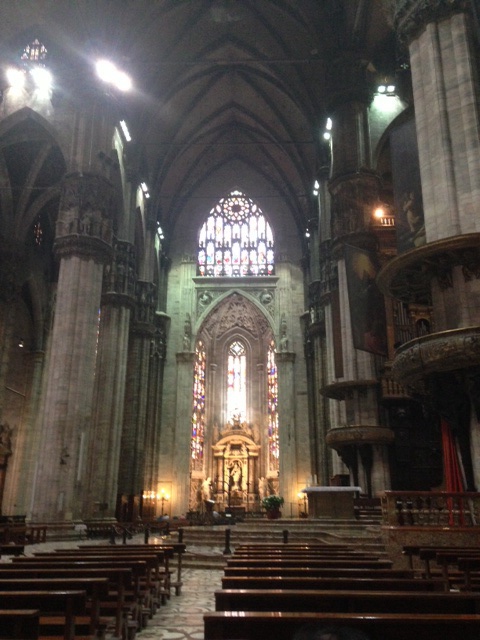
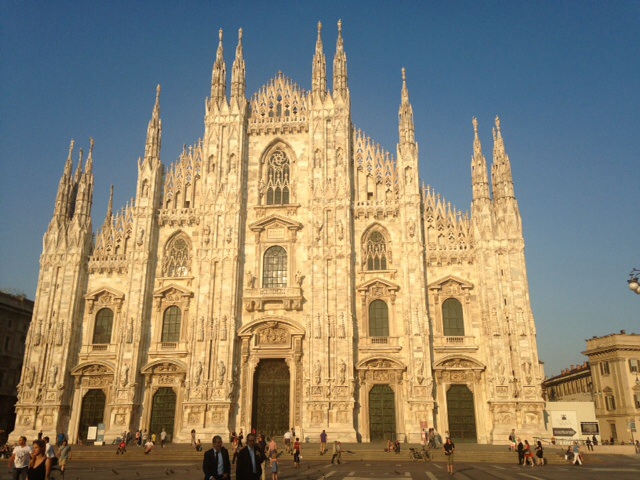
In the same way that all streets lead to Rome back in the days of the Empire, all modern streets in Milan either lead into the Piazza del Duomo, or circle around it.
You invariably get round some corner to come in full view of this majestic building, the 5th largest church in the world!
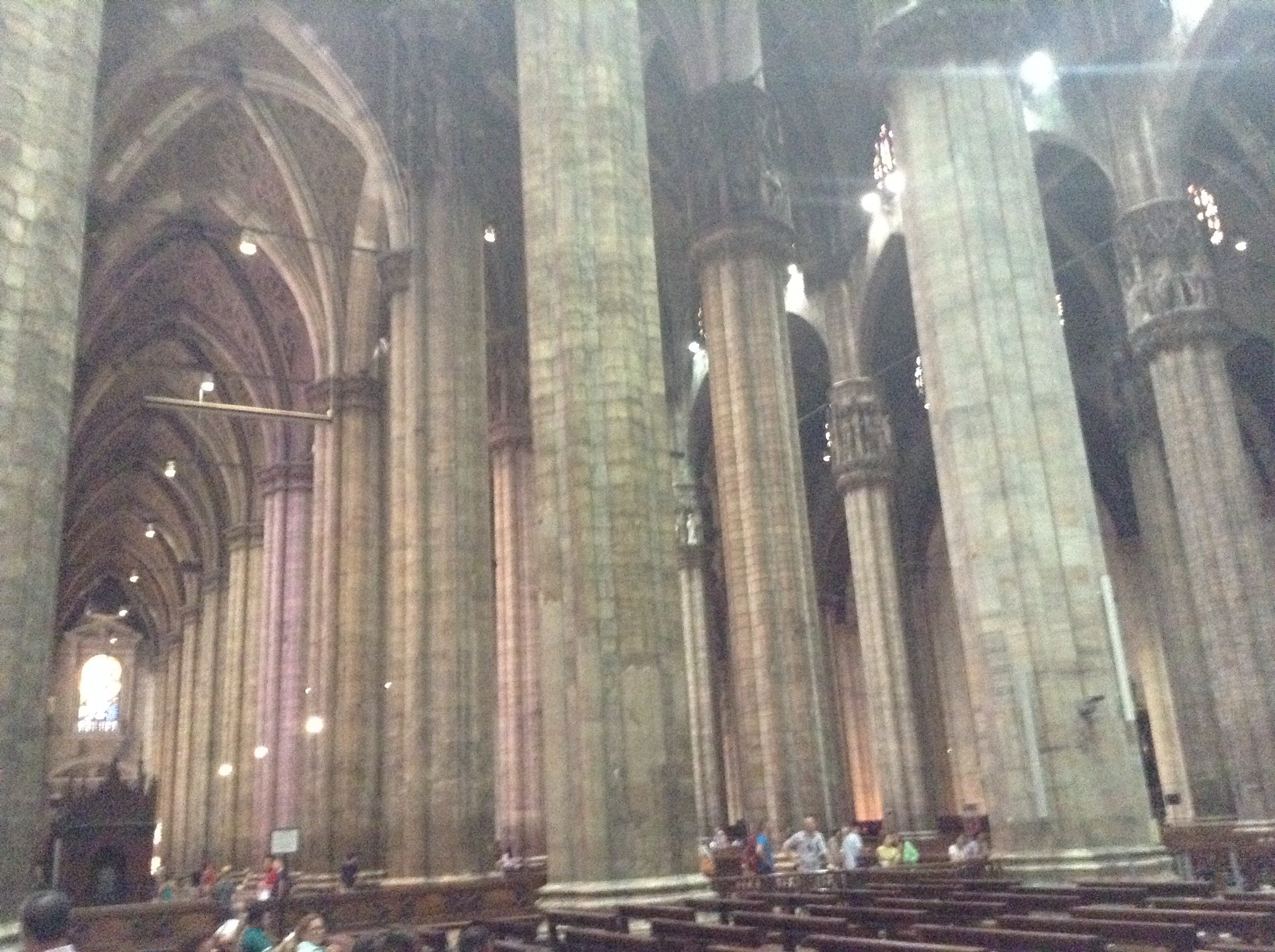
Built over 500 years (the last door dates from as recently as 1965) and funded almost entirely with the Milanese’ donations to faith, this building is both imposing and charming. Not typically Italian in its architecture, I now know its vague resemblance to the Notre-Dame de Paris to be due to its being built with the help of French architects.
An imposing sight, worth seeing at least once in a lifetime, this was my last sight of Milano and Italy on this trip!

image

image

image

image

image

image

image

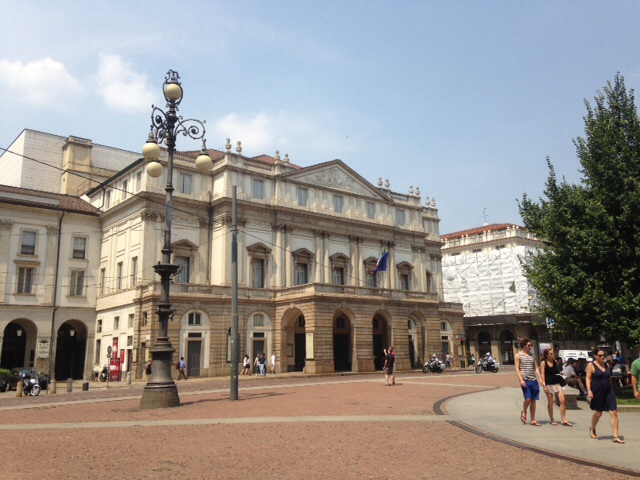
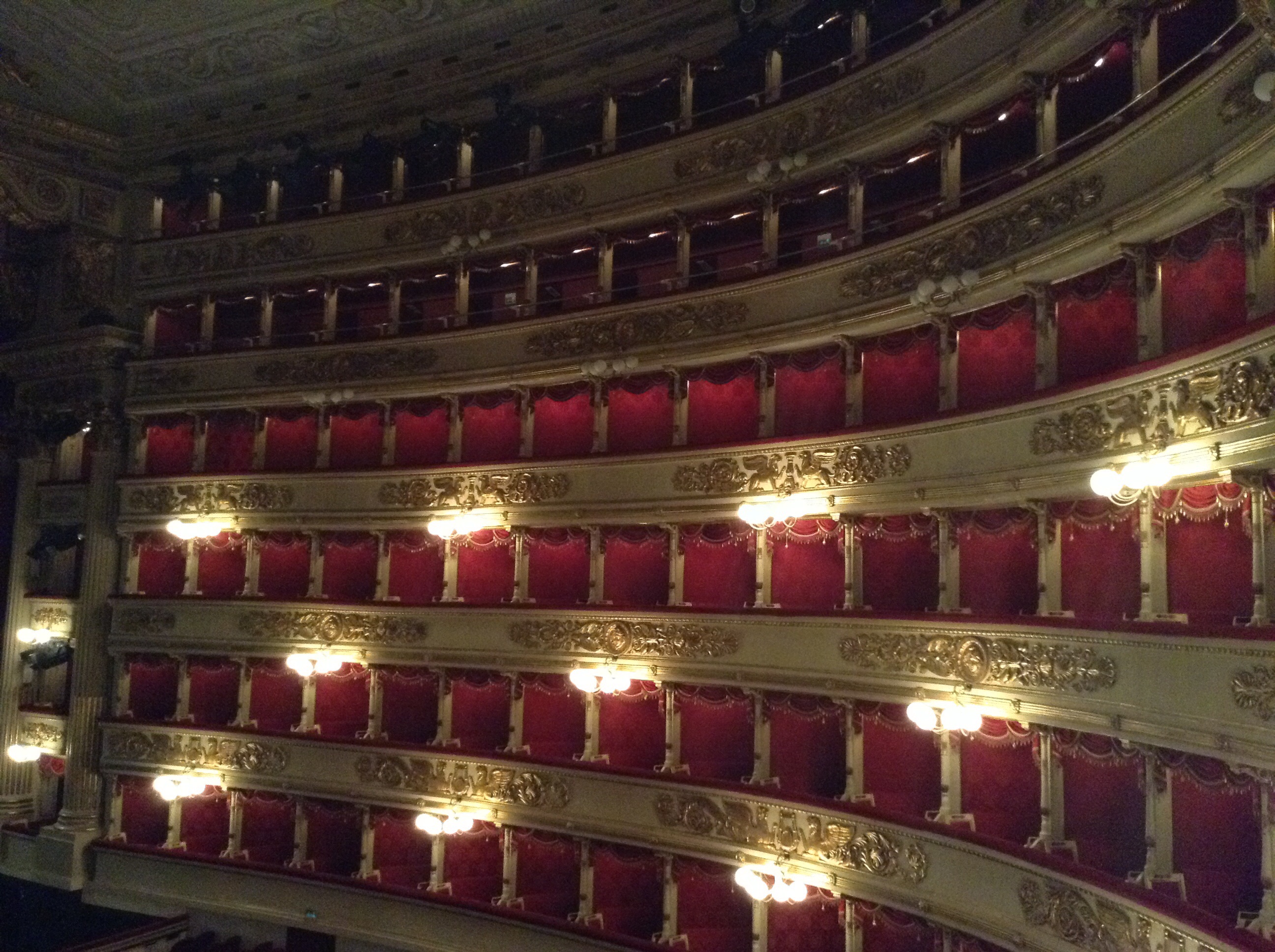
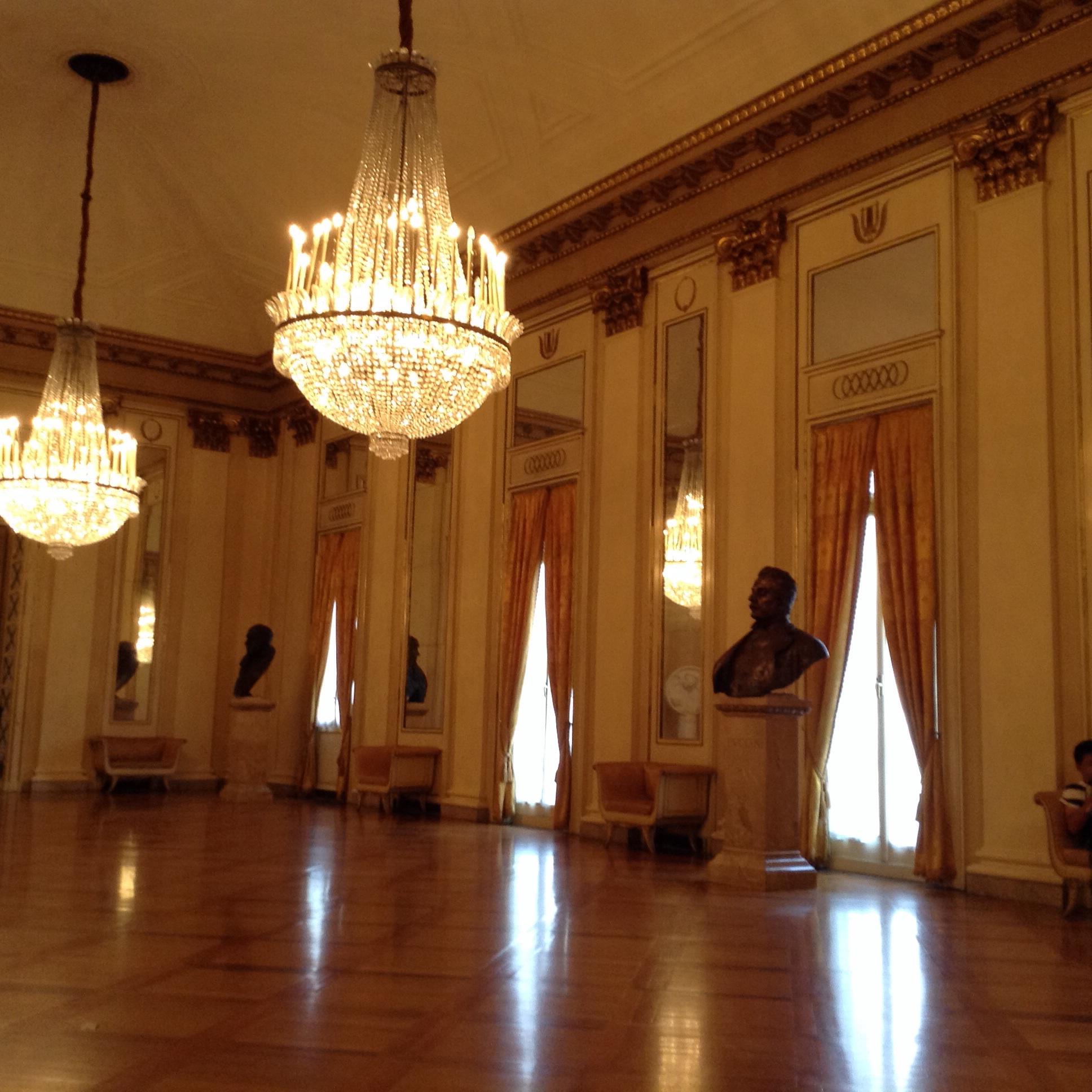
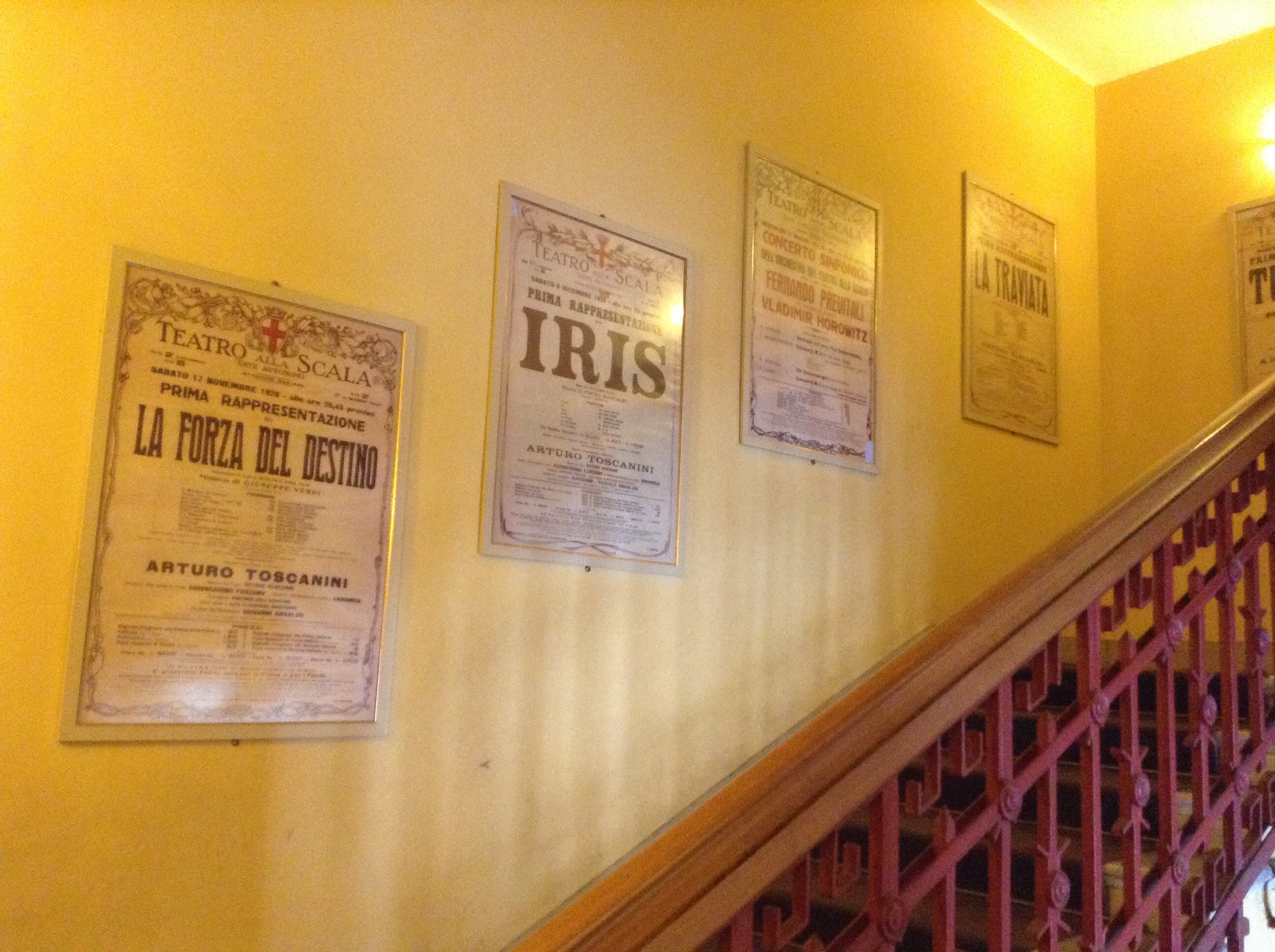
Teatro alla Scala

… No opera tonight, but I still made the pilgrimage to visit!
To think that this tiny little theatre puts fear in the best of opera singers!

image

image

image

image

image

image

image

image

image

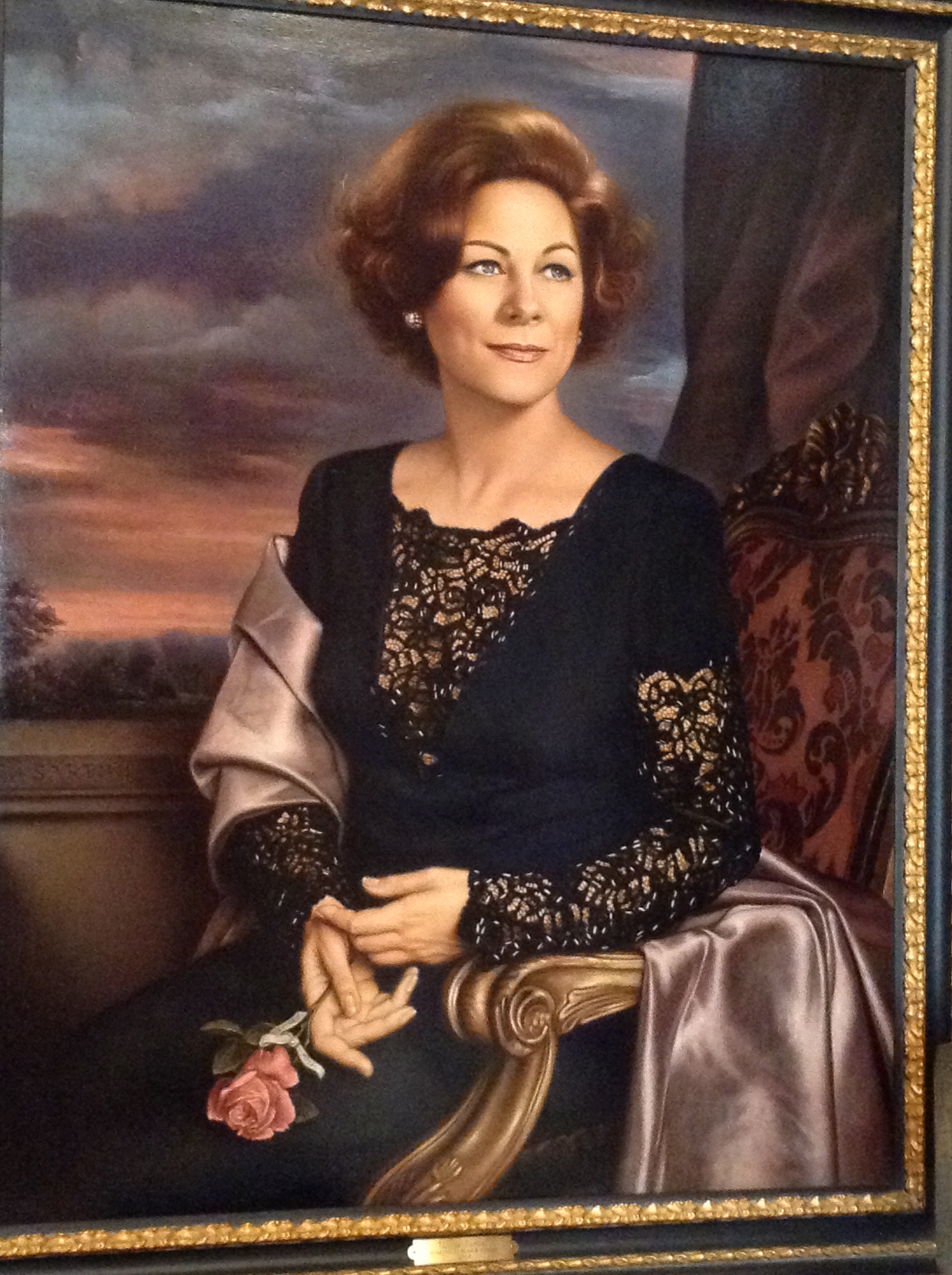
Can you see Callas’s reflection in the glass covering Puccini’s portrait?! I thought that was quite charming…

image

A Brief History of one of Opera’s Greats: Giuseppe Verdi

And now Verdi….

Lesley Koenig's avatarLesley Koenig

New blog post from Lesley Koenig –

Giuseppe Fortunino Francesco Verdi was born October 9th, 1813 and died January 27th 1901. He was an Italian Romantic composer mainly recognized for his operas. Verdi is considered one of the preeminent opera composers of the nineteenth century. His productions are regularly performed in opera houses throughout the world and, surpassing the boundaries of the genre, a couple of his themes have long since been embodied in popular culture.

Giuseppe Verdi

Verdi was born the son of Carlo Giuseppe Verdi and Luigia Uttini in Le Roncole. As a child, Verdi and his parents moved from Le Roncole to Busseto, where the future composer?s education was greatly influenced by trips to the large library belonging to the local Jesuit school. Busseto was where Verdi was given his first lessons in composition. When Verdi was twenty, he went to Milan to continue his education. Milan?s beaumonde association…

View original post 250 more words

Singing in the rain featuring Pacido Domingo

When I left Paris I checked the weather for Italy and was thoroughly disappointed to see the forecasted thunderstorms and rain. However, other than on the evening of my arrival, the weather has been fabulously hot and sunny…
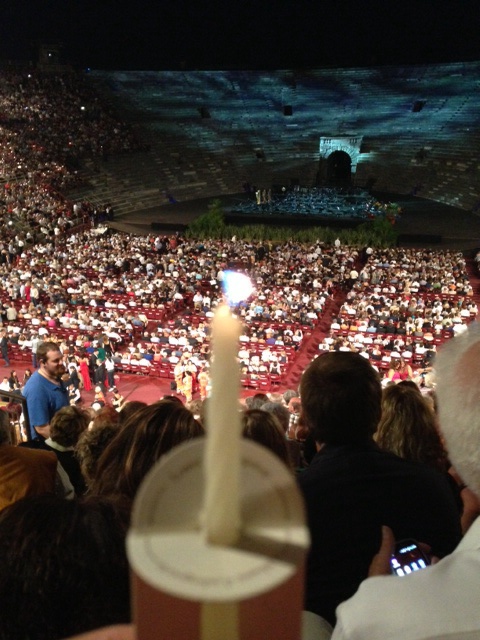
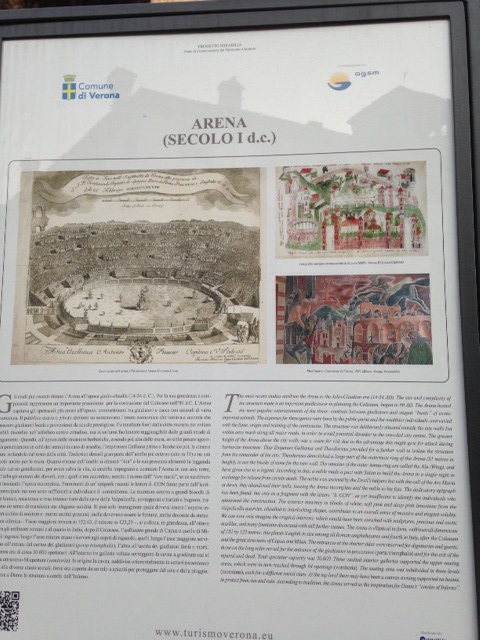
That is, until last night, when I had the unique opportunity of experiencing a thunderstorm from an ancient Roman Arena… The Arena di Verona!

image

But let’s start at the beginning.
I had chosen to attend the Opera Festival in Verona during this week for the chief reason of securing another opportunity to see Placido Domingo live, possibly the last time. He is a great tenor, he’s talented, smart, incredibly knowledgeable when it comes to music (he conducts orchestras, too, the hardest thing to do), appears to be a charming man in interviews.. but he is also in his 70s and at an age when most tenors would have retired…some, like poor Pavarotti, permanently! I simply could not pass the opportunity of this live encounter!
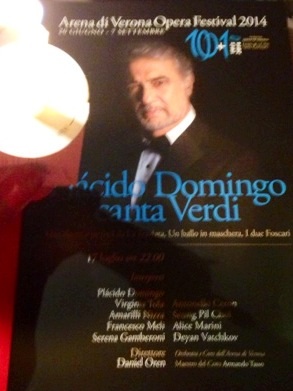
image

I got to the arena in good time to line up for the gates to open. I had dressed up for the occasion: I might have had to sit on marble steps, but I put on an opera house worthy dress, complete with silk shawl! I had bought Prosecco! Took in a breath, feeling the joy of the moment! This was a night to remember for me…and not just for me! The Arena di Verona soon became truly packed with people….22000 souls ready to be charmed and thrilled by the Great Man! We all got free candeletti at the entrance, those little white candles that, as per Arena di Verona tradition, get lit at the beginning of each performance. A fire hazard, to be sure, but the image of an ancient Roman amphitheatre lit up by thousands of candle lights is thrilling and romantic and creates such a wonderful atmosphere.

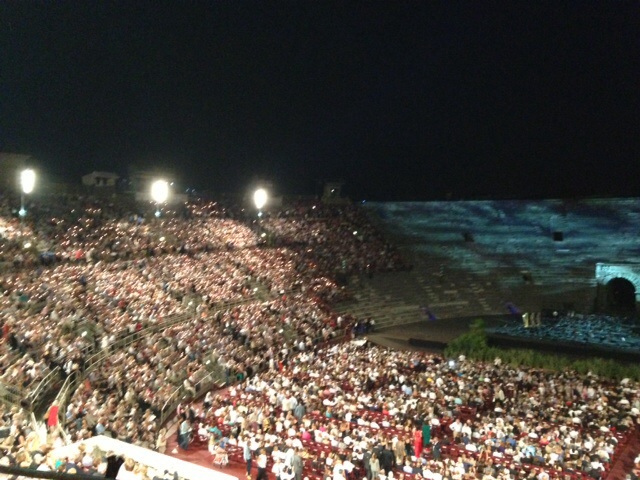
image

image

image

I was particularly curious to see how Domingo’s voice would fare in such massive a theatre, given that, naturally, at his age he is no longer at his best. My mum, the opera expert of the family, warned me against possible disappointment. The performance started and I got to realise Domingo is a very shrewd musician: rather than singing the performance solo he had laid out a program of carefully chosen duets; instead of attempting tenor showpieces he had chosen a carefully deliberated repertoire of mostly baritone pieces. In La Traviata he was no longer Alfredo but the father! Appropriate and clever! Smart man! Smart choice. And his voice, given his very strategic choices, was no disappointment, emanating throughout the enormous venue the familiar beautiful and rich sound he had first brought to the Arena 49 years ago!

image

The first half of the programme went flawlessly and beautifully. And then…. Little specs of blue in the sky forewarned of a possible storm. Intermission was met with increasingly strong winds. Finally, a full blown storm descended upon us and Verona became the sight of furiously pouring rain and some scenic, if also frightening, thunders!!!
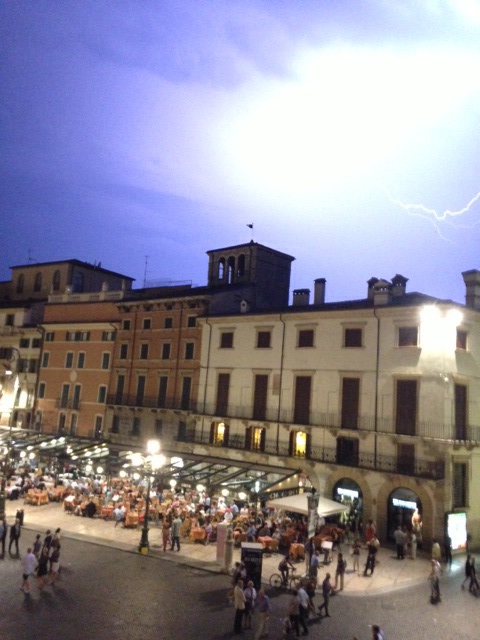
image

The audience then split in two: the pessimists, heading out fast; and the optimists, taking refuge in the catacombs, hoping for a brief storm and a return to Act two.

image

The pessimists were right. At 12:30, I left behind a mere handful of people, and headed back to the hotel.
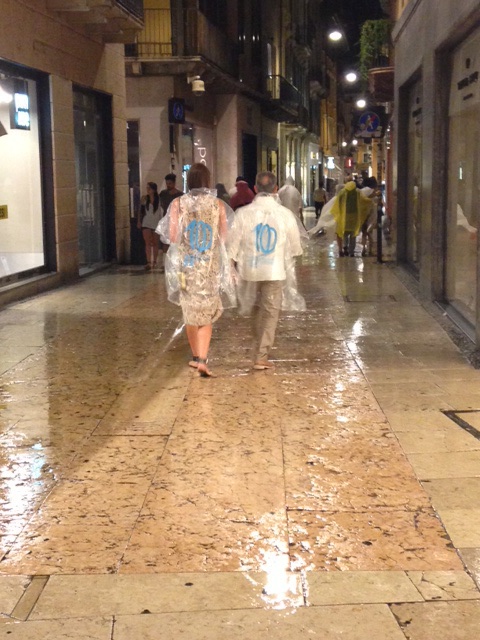
image

Domingo’s appearance at the Arena was fated to be a short one. A sign from God, perhaps, that he, too, might soon look upon the stage as a place belonging to his glorious musical past.

A brief history of another one of opera’s greats: Giacomo Puccini

In keeping with th opera theme of the last few days of my trip.

Lesley Koenig's avatarLesley Koenig

New blog post from Lesley Koenig –

GiacomoPucciniKoenig

Giacomo Puccini

 Verismo: True to Life

Giacomo Puccini, known as Italy’s greatest composer after Verdi, was born Giacomo Antonio Domenico Michele Secondo Maria Puccini in Lucca, Tuscani. With such a name he was destined for greatness. One of seven children of Michele Puccini and Albina Magi, Giacomo was born into Lucca’s local musical dynasty. His great-great-grandfather, also named Giacomo, was the maestro di cappella of the Cattedrale di San Martino in Lucca — a position that was passed down from father to son all the way down to Giacomo’s father. The men in la famiglia Puccini all studied music in Bologna and had successful careers in music composition. La famiglia Puccini had held the position of maestro di cappella for 124 years when Michele Puccini died in 1864, leaving the position for his son, our Giacomo. However, Giacomo was only 6 at time and thus…

View original post 508 more words

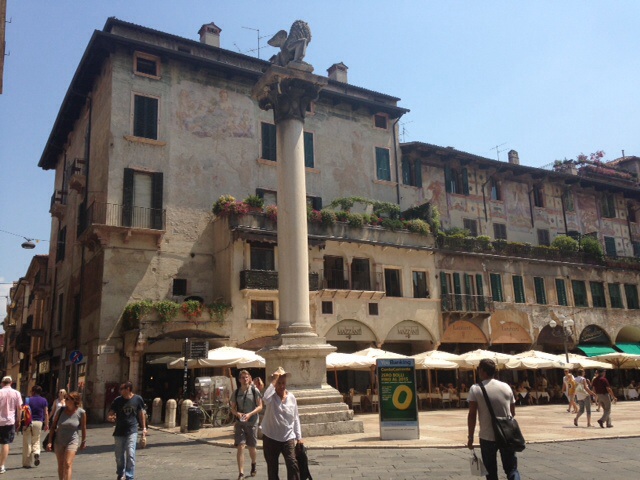
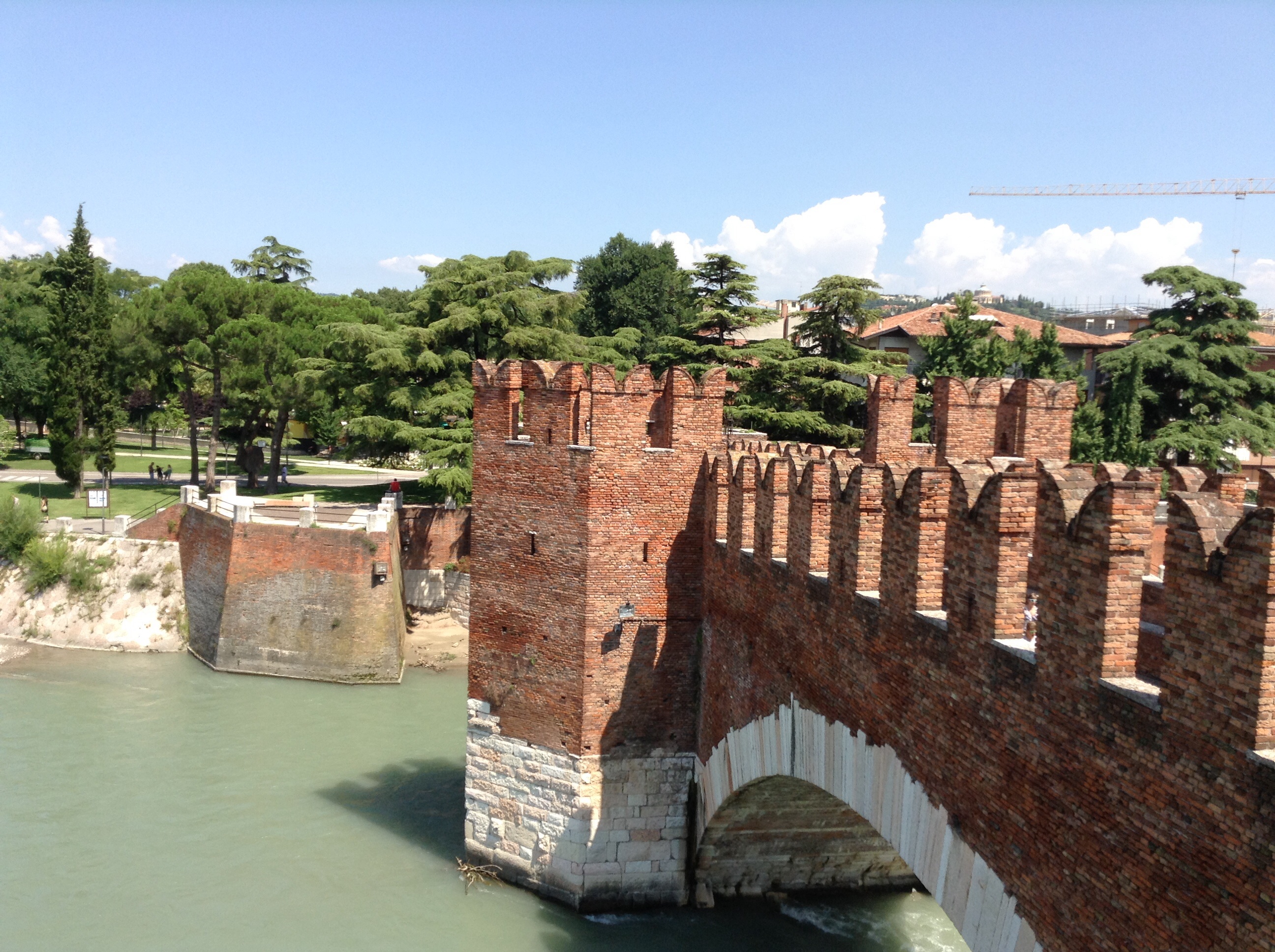
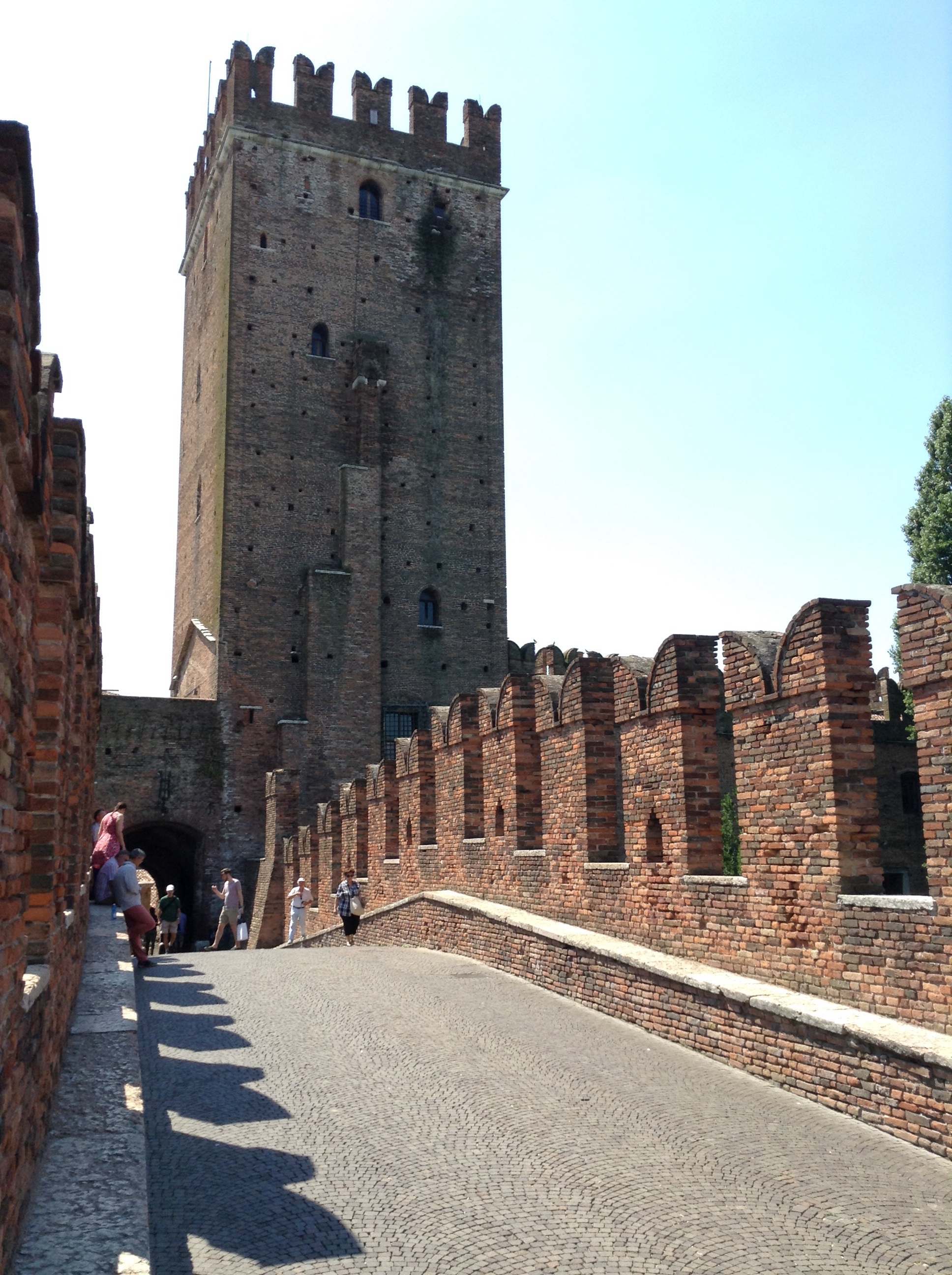
Walking the streets of Verona

Arthur Rubinstein once famously stated that he couldn’t imagine a world without Beethoven. I, if I may be so bold as to paraphrase him, cannot imagine a world without Italy.

I don’t know if it’s the climate, the colours of the streets, the perfected carelessness of the locals’ attitude or just the drop of ancestral Roman blood in me, but I love everything about this place. And Verona couldn’t be more representative of all the good things in Italy.

image

image

image

image

image

image

image

image

Back to Arena di Verona

I am back in Verona. It is my third time here, so I think it’s fair to say that by now, Verona is the Italian city I know the best. The old city feels like home: I know the streets, the restaurants, the shops and the supermarket and require no map to find my bearings. What a beautiful city this is, so charming and full of life.
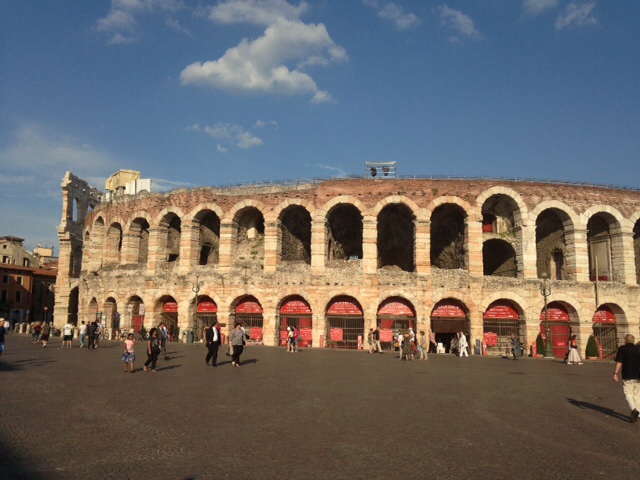
image

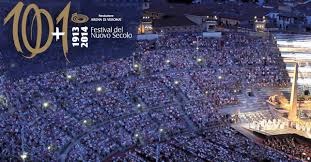
Every summer, the city hosts the Arena di Verona Opera Festival in the old Roman amphitheatre, the Arena….it’s been doing so for 101 years!

image

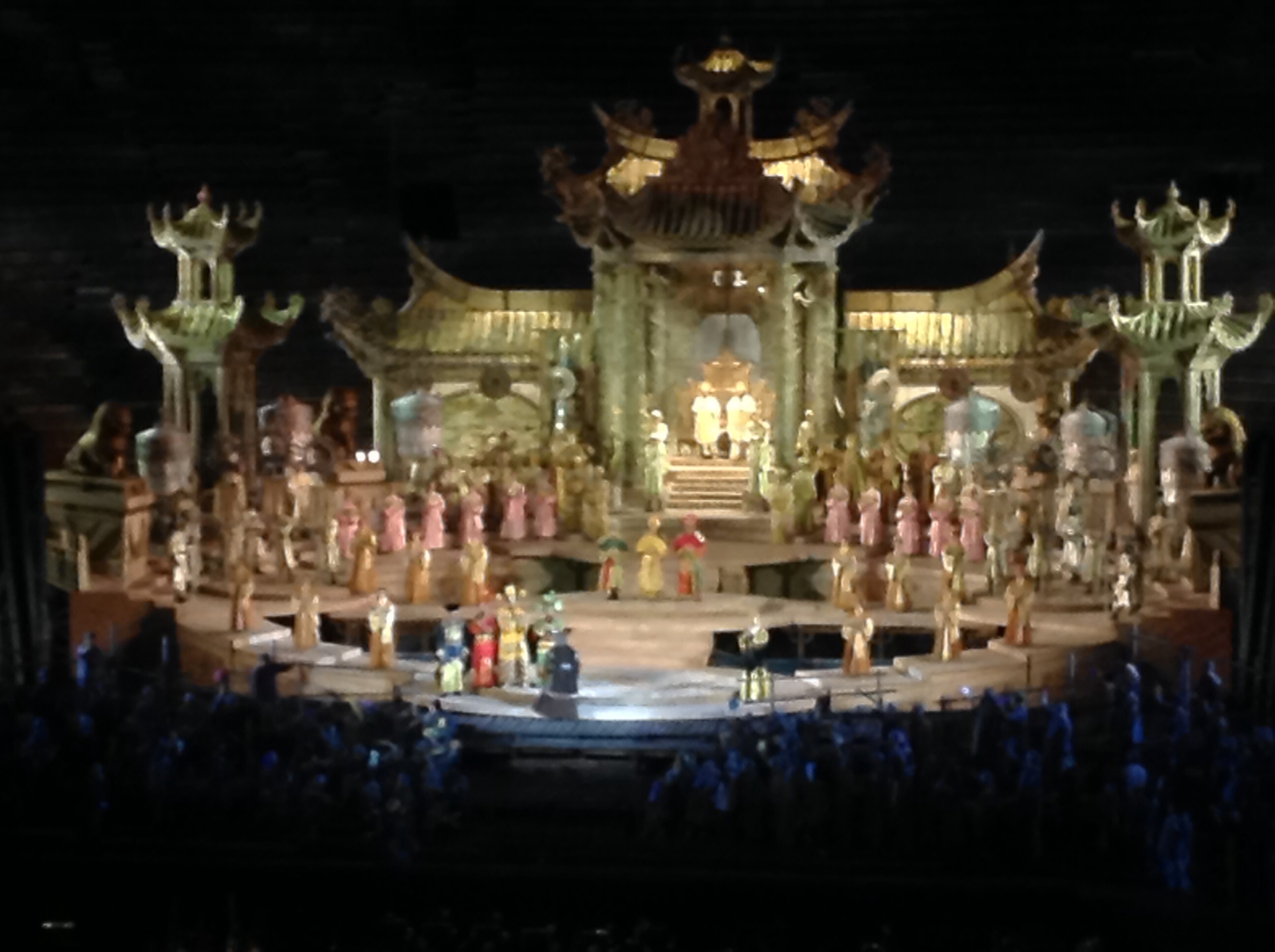
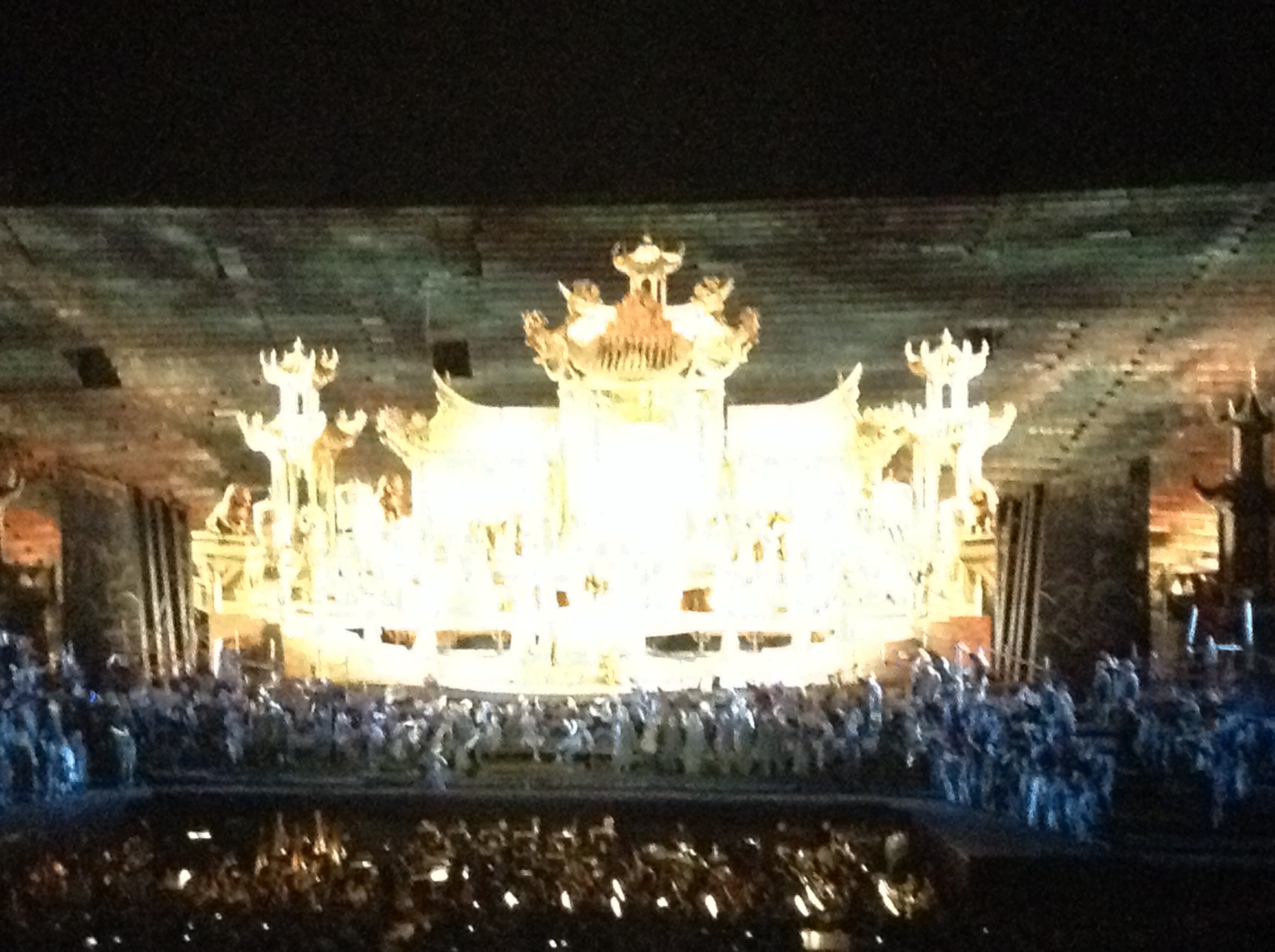
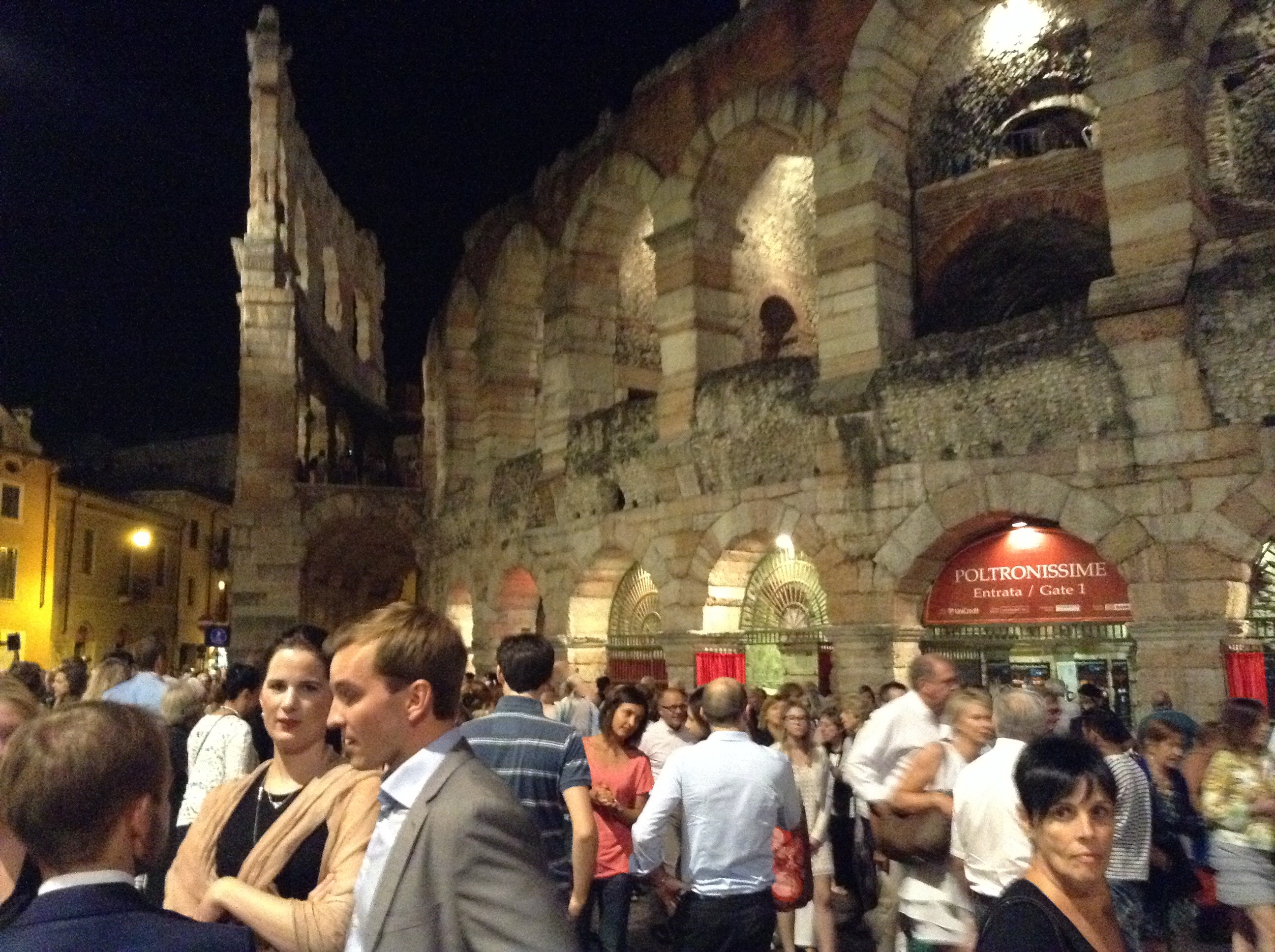
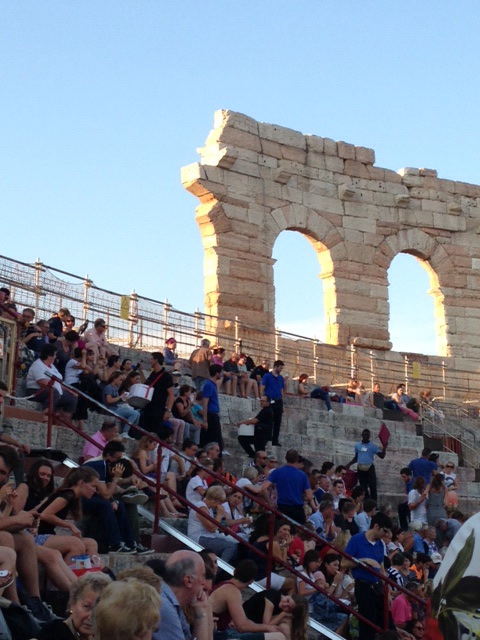
Verona is also home to the hottest summers in Italy, and today was no exception: 32 degrees at 7 pm! Tonight I went to see Turandot. The specificity of this festival is that, unless you book premium tickets for the armchairs set up in the middle of the Arena for the event, you get to play Roman for the evening and sit on the ancient stone steps. There is also no seating arrangement for the steps, which get filled on a first come, first sat basis. In practice, this means that if you want a good location on the lower steps, you pack a mini-picnic, bring drinks (but not in glass bottles) and come in early. The doors open at 7 and the good seats are taken by 7:30! The performance usually begins at 9! So, by the time the performance starts, you’ve already been simmering under the hot sun for close to 2 hours.
image

image

It was the ‘prima’ for this production of Turandot tonight, and Franco Zeffirelli, who is the director, was also attending. At 91 years of age, he bravely managed to survive the 3 hour performance in the heat and also came up on stage at the end. What a life this man has had! Have you seen the movie “Tea with Mussolini”? It’s a biographical account of his early years. It is also one of my favourite films, and not just because it is set in Tuscany.

Anyway, the opera itself was very good, and the stage production, as it is always the case at Arena, was over the top and impressive.

image

image

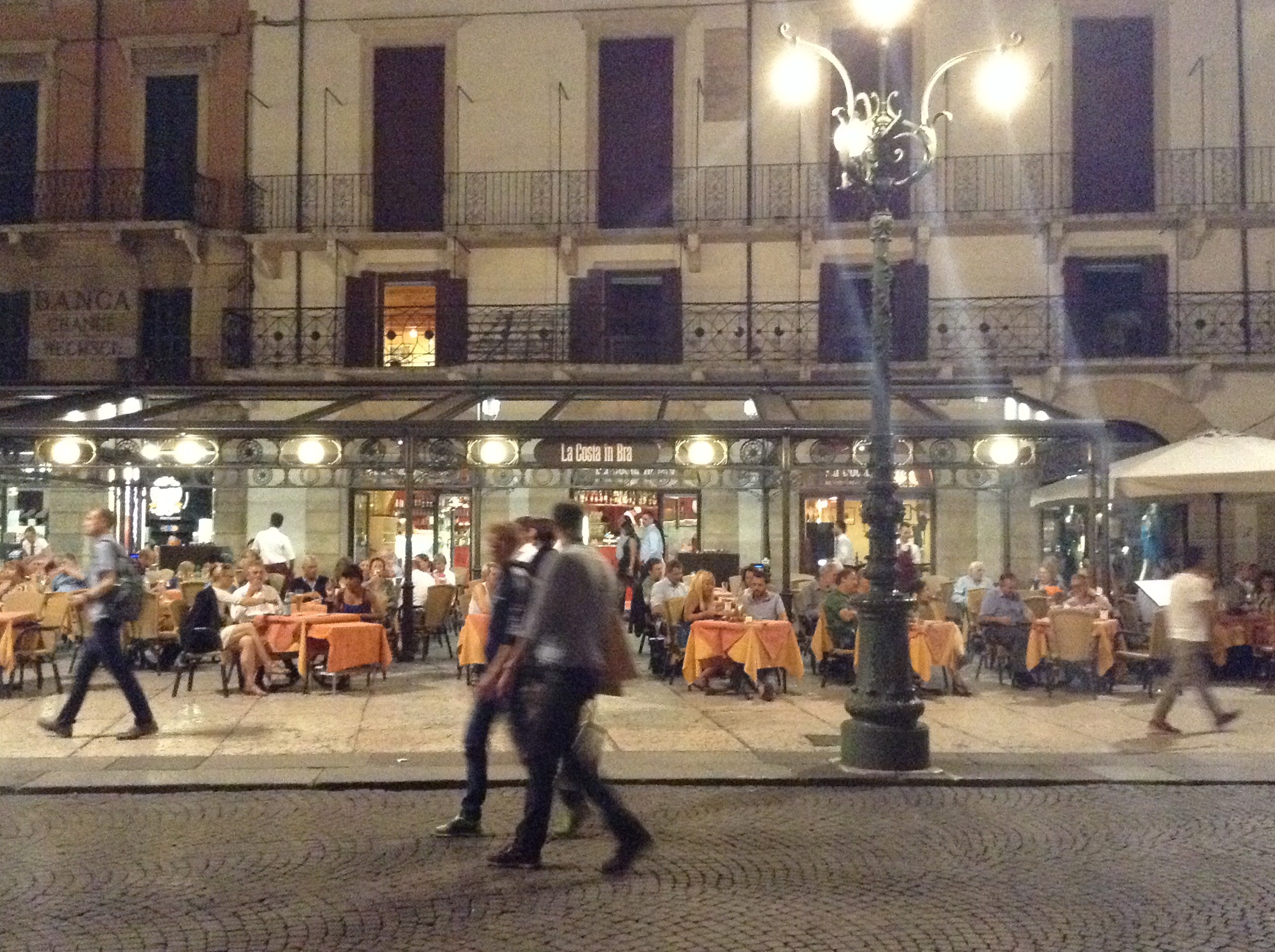
Afterwards, Piazza Bra is brimming with people, many of whom get ready for a proper dinner…at midnight. All restaurants are open, even some shops. The cheer only subsides around 2!

image

image

image

image

Tomorrow, I plan on enjoying the old sights, walking around, doing nothing. Then, in the evening, back to fighting for the steps and Verdi with Domingo.

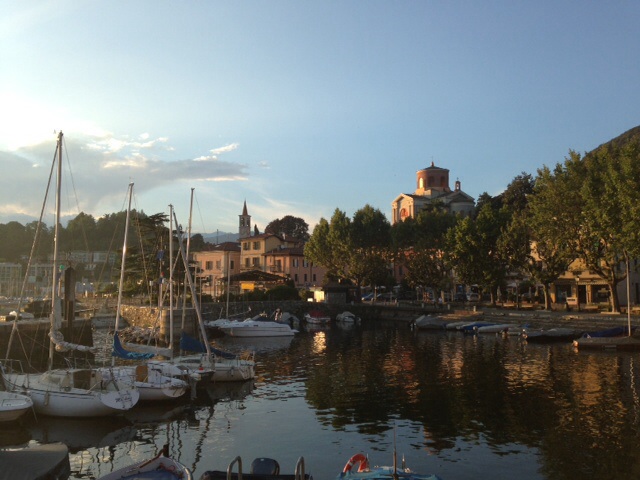
Peaced out in Verbania

… And a little peaced off, to be honest. Sorry, couldn’t resist the opportunity of clever expletives 🙂
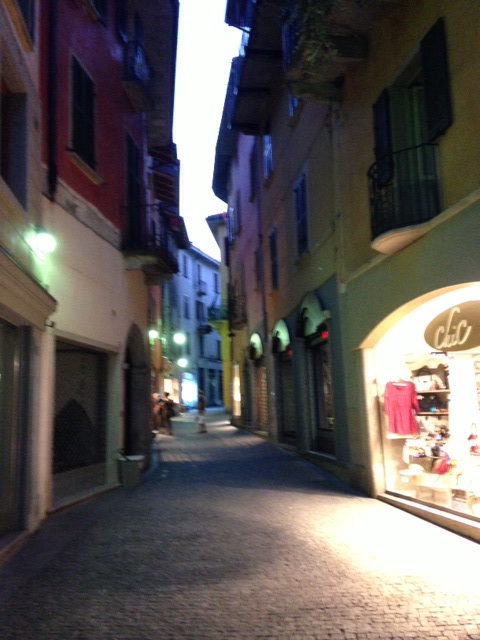
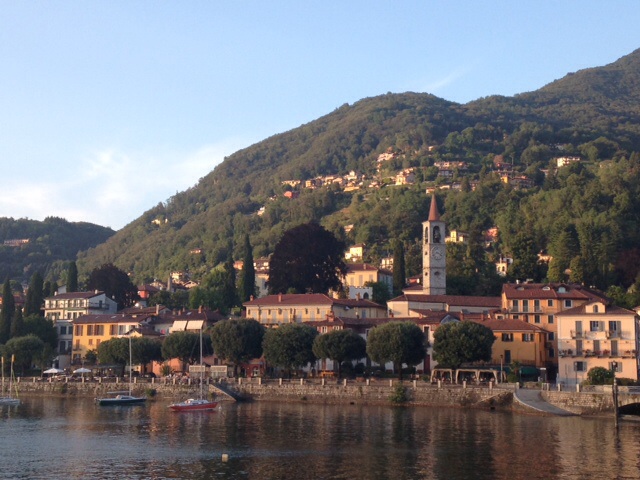
Tomorrow I am leaving Verbania to go to Verona. So tonight, I thought “let me give this town a chance” and set out to explore it on foot, shortly after dinner. Never in my life and my many travels have I come across a more dead Italian town. The streets were deserted!?! A few idle youth, beyond frustrated with their location, I imagine, were feebly attempting the classic passeggiata, but, frankly, when I encountered them again within 10 minutes I turned on my heel and dashed back to my equally happening retirement home :))

image

image

image

I don’t know what’s happening, but this place really astonishes me. Italy has never before failed to entice me to be alive, to live life, to enjoy life! However, Verbania has a strange deserted feeling that I cannot shake. I walked the shopping streets, the squares, the waterfront and beyond in search of some sign of life, but was met with nothing but emptiness. Is this Italy? Am I in Switzerland already!? And then I remembered how once I had read how even in the Italian speaking part of Switzerland people are a bit reserved, lacking the usual warmth and joy of the Italian spirit. At the time I did not believe it, putting it down to the subjective feeling of a bitter and frustrated expat. Now, however, I am inclined to give credence to that statement and even take it further: I think the Swiss spirit made it over the mountains. The signs were all around me: the ferries did leave on the dot, the cashier shouted to get me back to the window for my change when I mistakenly gave him two 10 Euro notes instead on one, and the bar lady last night gave me credit in the country with no such banking notion. Could it be true? Do the influences on one nation spread over neighbouring regions of one very different nation!?

image

I don’t know, and, no, I don’t get that fuzzy feeling from the Swiss, in case you’re still wondering.

All I know is that, when I reached the waterfront tonight, one poor duck, alone in the water, was crying its heart out again and again. Maybe it was a lost duckling, separated from its parents, I couldn’t really see that far out well enough to be certain. But maybe it was a Neapolitan duck, lamenting its estrangement and wondering, as was I, whether this is still Italy!

image

Isola Bella on Lake Maggiore

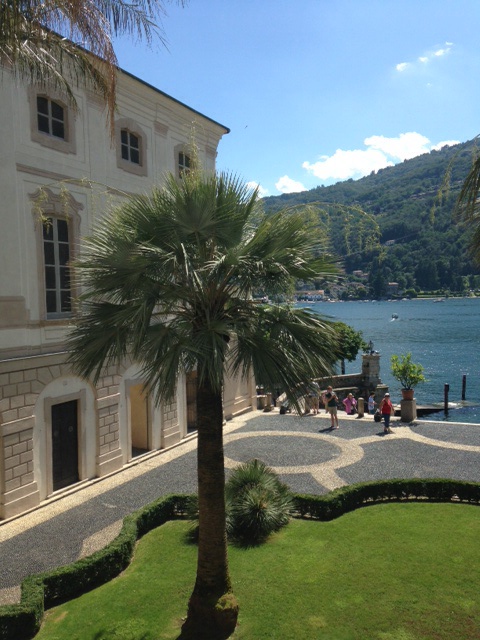
Back in the 1600s, a few successive members of the House of Borromeo, an old noble Milanese family, built summer houses on two of the small islands on southern Lake Maggiore – Isola Madre and Isola Bella. Today I spent the afternoon on Isola Bella, one of the three Borromean islands (the third, fyi, is called Isola Superiore).
Initially, I had planned to visit all of the islands, but my morning got side-tracked on the phone to Covent Garden, trying to get tickets only to have the call drop after close to two hours on hold. But, anyway, back to Isolla Bella.

image

image

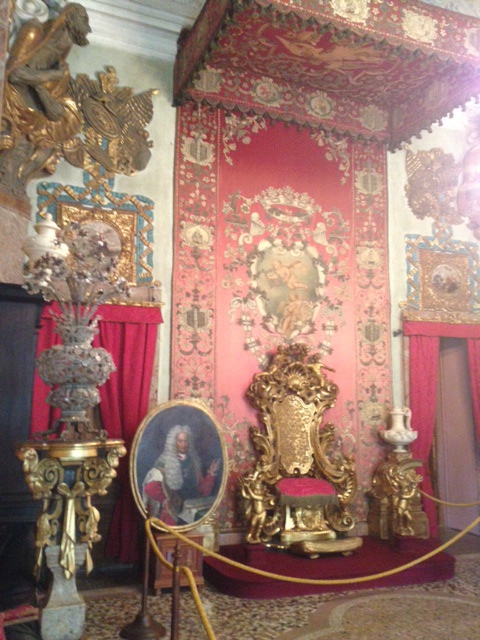
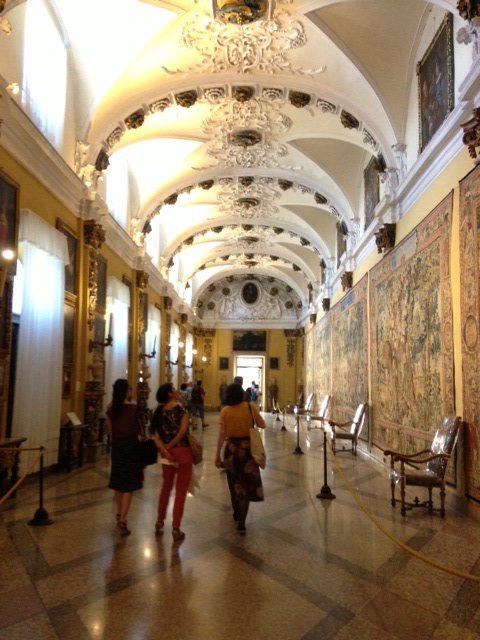
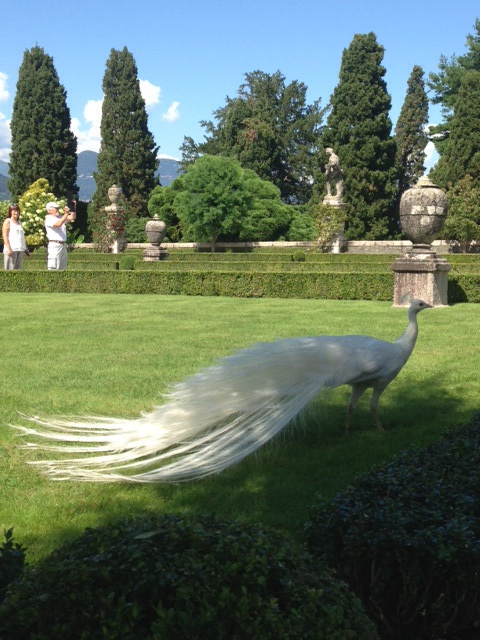
This island is small and unremarkable but for the beautiful Palazzo and the even more impressive gardens. I spent my time leisurely walking through the house, complete with a “basement” decorated to emulate coral reefs, then strolling through the majestic gardens, where, in 30 degree weather, even the white peacocks were seeking shade.

image

image

image

image

image

image

image

image

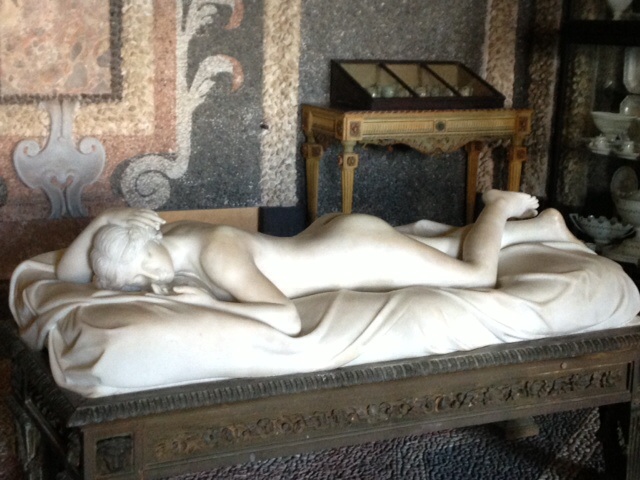
The one thing that impressed me the most, beyond the grandeur of the house or the ostentatiousness of the gardens, was a beautiful statue of Venus portrayed asleep by a sculptor whose name, unfortunately I cannot recall. [UPDATE:the sculptor is Vincenzo Monti]

image

image

It never ceases to amaze me how stone can be made into a fabric so sensuous and warm under the expert hand of a talented sculptor. Unlike painting, which can be retouched, sculpture is an art-form that is truly four dimensional: a spatial representation frozen in time, for a second’s mistake can ruin everything. For this reason, in my opinion, among all arts, sculpture is only akin to music, in that both capture a moment in time, freeze it, and allow this moment to continue into perpetuity and to also be experienced by others. I’m not sure I can articulate this clearly… I guess what I mean is that both music and sculpture succeed, though in very different ways, to encode, and thus stop, time.

image